Co-Op Experience @Goodself
Duration: Jan 2026 - June 2026
Projects
I. Reworking the New User Experience
Identifying the problem
The existing onboarding experience included a series of introductory tasks intended to help new users understand and engage with the app. However, user research revealed that these tasks were largely being overlooked. Rather than continuing to add more guidance to an experience users were already skipping, I saw an opportunity to reconsider how onboarding was structured altogether.
The goal became to create an onboarding flow that introduced users to the product more naturally, while still helping them understand its core value and encouraging meaningful early engagement.
Looking at Existing Patterns & Industry Standards
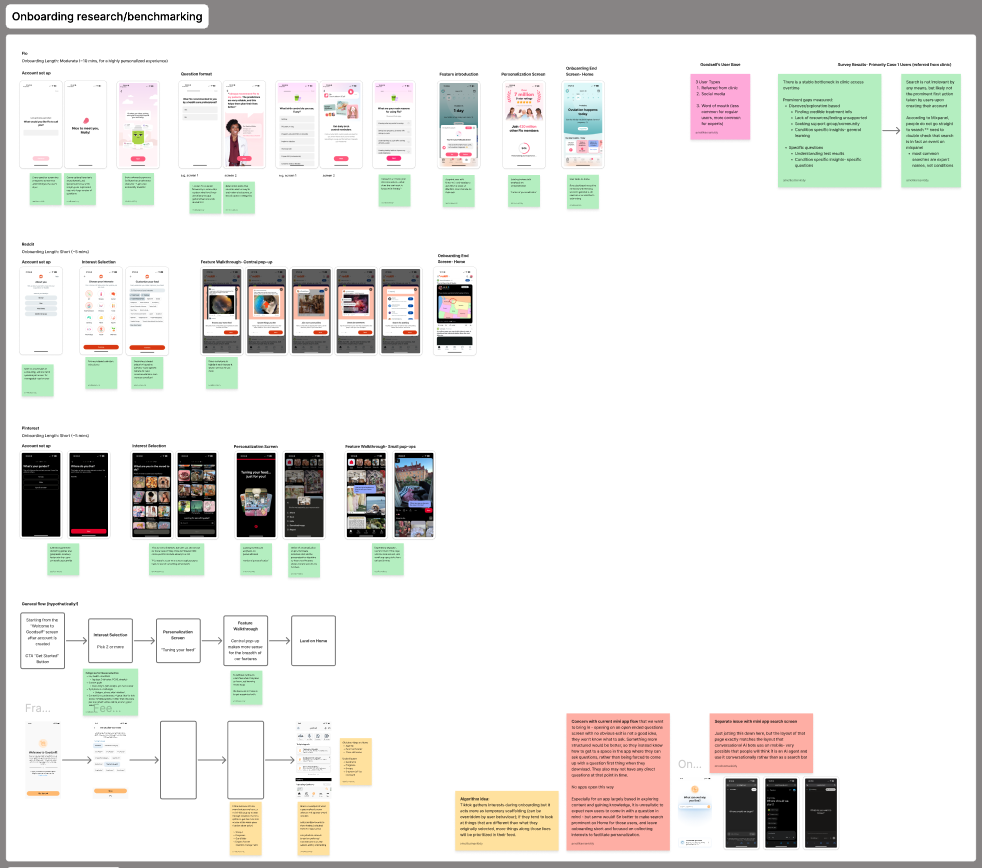
I conducted competitive research across other apps to understand how they approached onboarding, particularly how they balanced education, personalization, and getting users into the core product experience.
I looked at highly user-based applications that tailer to individuals, like Reddit, Flo and Pinterest as they shared a certain amount to shared ethos to Goodself.
This helped identify patterns in how other products introduced key features and reduced the amount of information users had to process upfront. I used these patterns as a reference point rather than directly replicating any one approach.
Reflection and Learning
My work term at Goodself stood out to me primarily because of the company culture. Everyone on the team is genuinely kind, supportive, and approachable, which has made a huge difference in how quickly I’ve been able to learn and contribute. Because everyone is so open and collaborative, I’ve grew comfortable asking questions, sharing ideas, and taking initiative super quickly!
In terms of my learning and development, this term has been a major step forward. I’ve transitioned from working on theoretical or self-driven UX projects to contributing to real product decisions that will impact users. One of my biggest accomplishments has been taking the lead on early-stage design tickets related to new features that we want to bring onto the platform. I conducted research, synthesized findings into actionable design directions, and translated those into measurable tickets for development. Now, I am actively working through these designs and will continue refining them over the summer, through my extended term.
This experience has strongly reinforced the connection between my academic studies and real-world application. As a Cognitive Systems student, I’ve learned about user behaviour, cognition, and HCI. Beyond that, in my independent studies, I have worked with the entire product design process from the theoretical standpoint. At Goodself, I’ve been able to apply those concepts directly to a live, functional application, which has felt very meaningful to me.
Looking ahead, this work term has shifted my long-term career priorities. While I previously focused heavily on role responsibilities and growth opportunities, I now place a much higher value on company culture. Working in a supportive and collaborative environment has shown me how much it impacts both the quality of work and the speed of learning. It’s something I will certainly prioritize in future roles.
Reframing Goodself’s Existing Flow
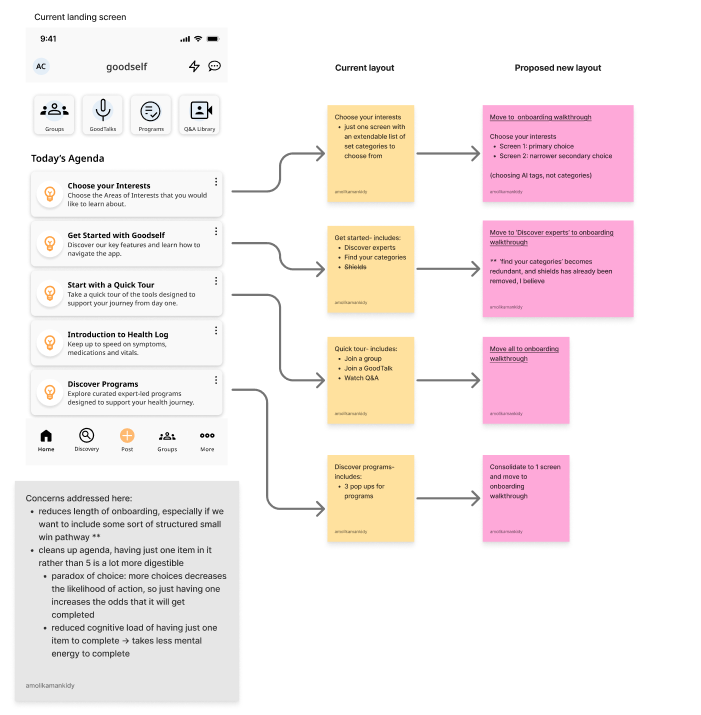
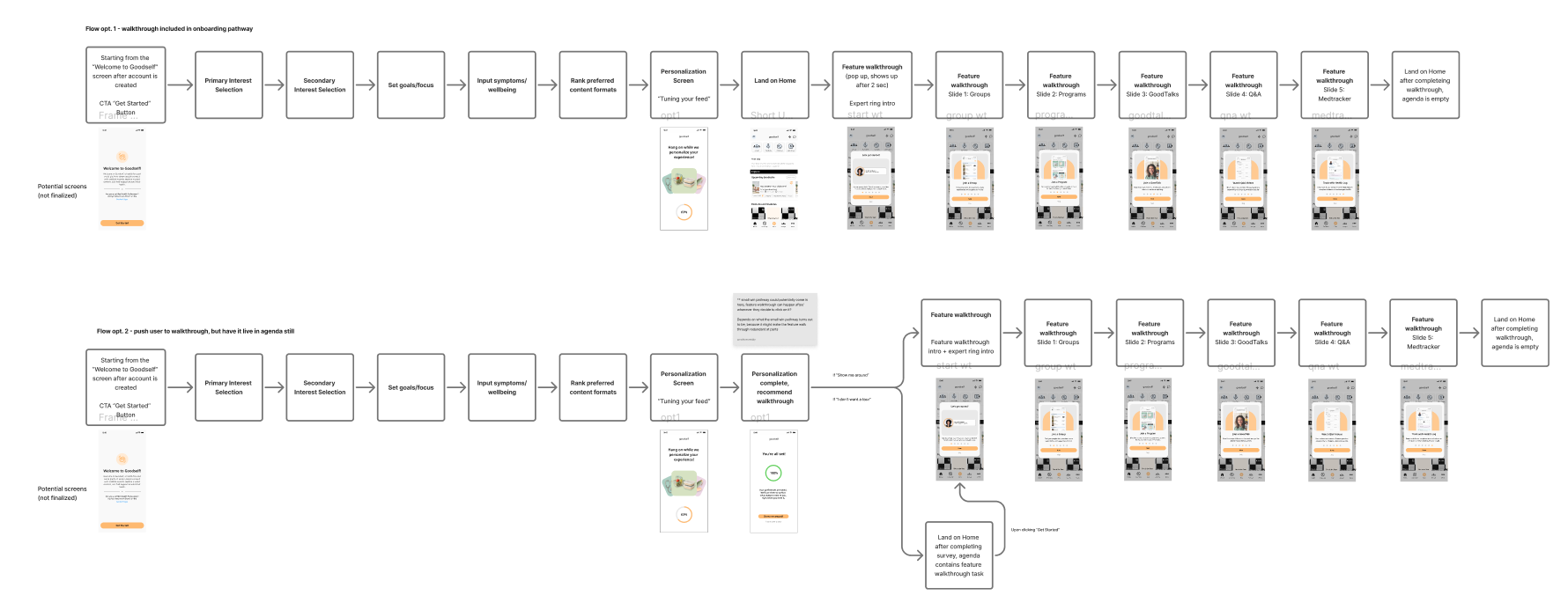
Using these findings, I mapped out a high-level direction for restructuring the existing onboarding experience. Instead of treating onboarding as a sequence of introductory tasks, I explored how the experience could be integrated more closely with the user's initial journey through the product.
The proposed changes focused on reducing friction, making the purpose of each step clearer, and introducing information at the point where it would be most relevant to the user.
Exploring & Building Out Alt. Flows
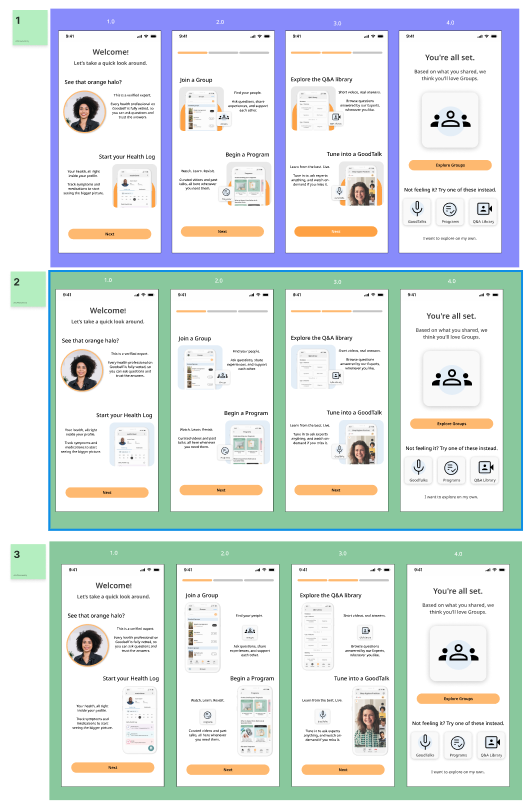
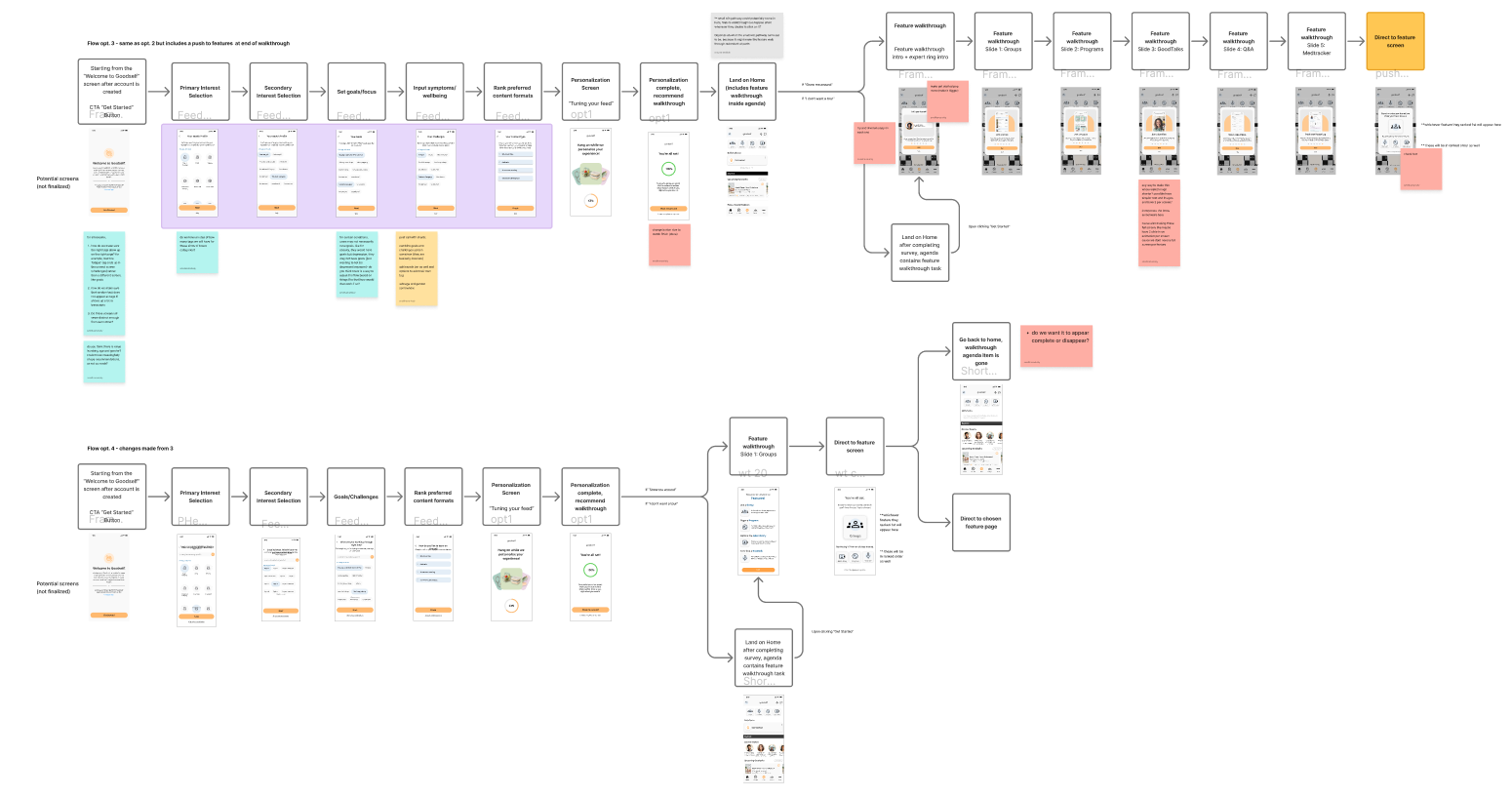
From this initial direction, I developed several alternative flows to explore different ways the experience could be structured, based on different original ideas and feedback from iterative meetings with senior team members, which I found very helpful! I also designed some new screens to support the different approaches and considered how each would affect the user's transition from onboarding into the main product.
Exploring multiple flows allowed me to compare different levels of guidance and determine where onboarding could provide value without becoming another barrier between users and the product itself.
Outcome
The project resulted in a set of alternative onboarding flows and new screen concepts that addressed the gaps identified through user research. While the designs were not ultimately implemented due to changes in the company's priorities, the process gave me the opportunity to take an existing experience, identify where it was falling short, and explore multiple ways of restructuring it around observed user behaviour.
II. Highlighting Existing Feature
Identifying the Problem
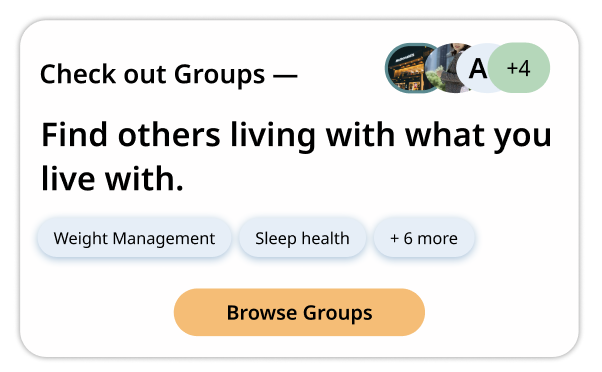
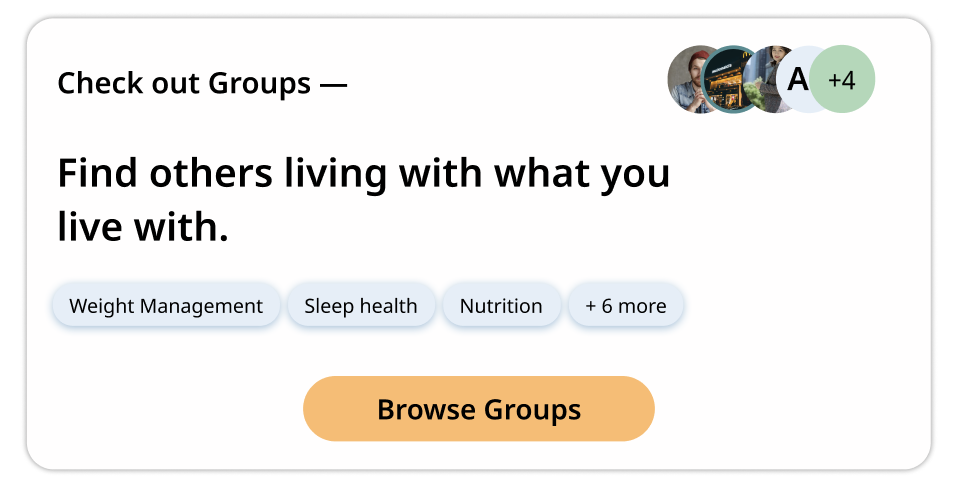
With potential rebranding efforts, we wanted to see what it would look like to place a stronger emphasis on its community experience rather than informational content. This created an opportunity to revisit existing features and consider how they could better support this new direction. I focused on the Groups feature, an existing community feature within the app, and explored ways to make it more visible and integrated throughout the product.
Process
I began by looking at the existing design system and legacy components to understand the visual patterns that were already established within the app. Instead of designing from scratch, I used these components as a foundation and considered how they could be adapted to fit the new brand direction. This helped maintain familiarity and design system consistency within the product while giving the feature a more prominent presence.
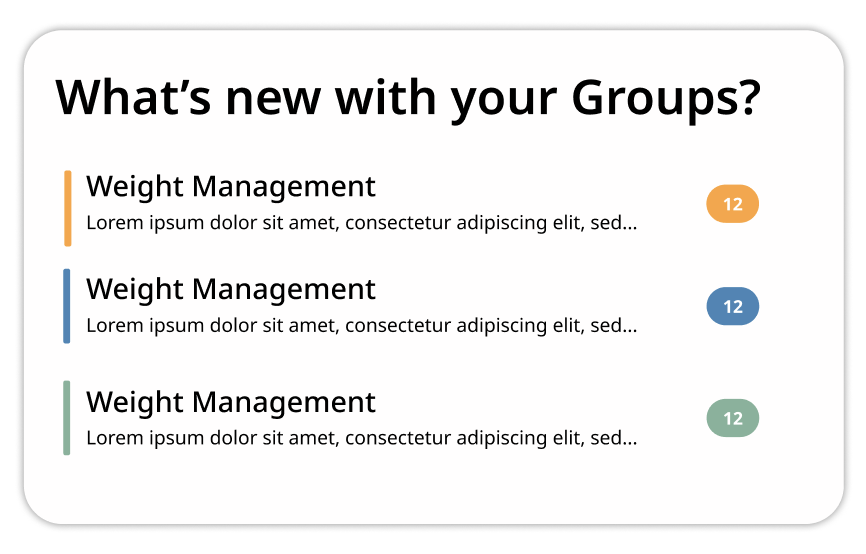
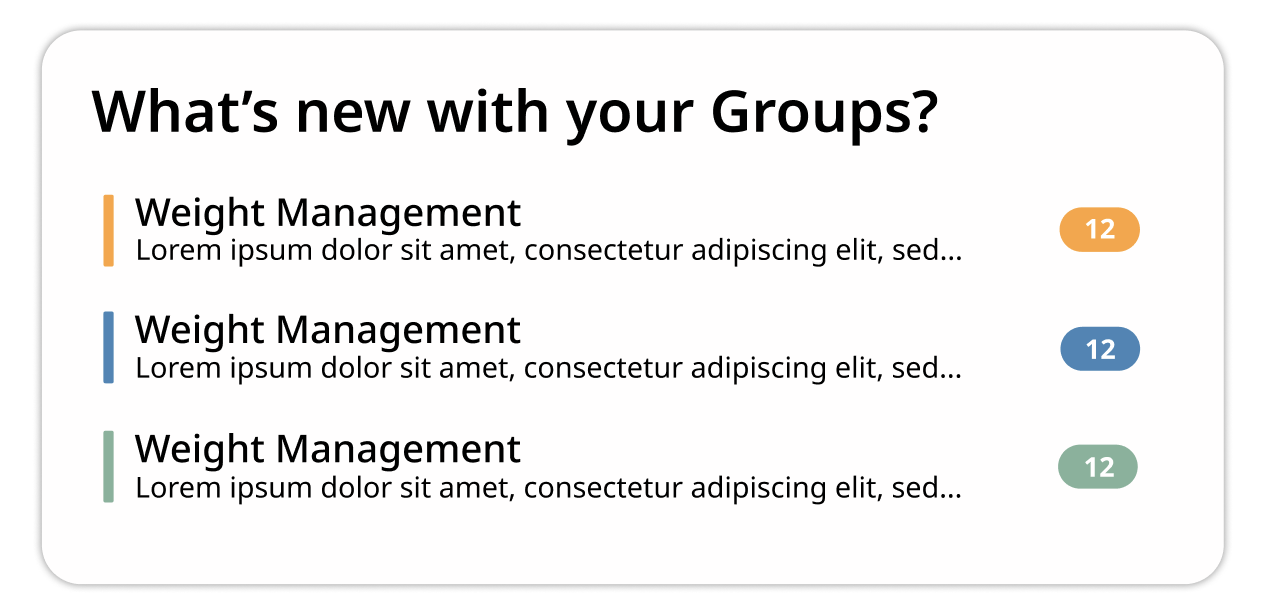
From there, I developed new header components for mobile and desktop that could be incorporated into the existing dashboard and other key pages. I explored different layouts and approaches for highlighting the Groups feature while considering how the components would work within the constraints of the existing product. Throughout the process, I brought iterations to senior team members for feedback, using their input to refine the designs and determine which directions best supported both the new brand and the broader product goals.This project showed me how seemingly small UI changes can support larger product and brand priorities when they are grounded in a clear strategic goal.